Buy socialmediaguru.eu ?
We are moving the project
socialmediaguru.eu .
Are you interested in purchasing the domain
socialmediaguru.eu ?
domain@kv-gmbh.de · 0541-91531010
Buy socialmediaguru.eu ?
How is the partitive formed?
The partitive is formed in French by using the preposition "de" followed by the definite article "le," "la," or "les." This combination contracts to form "du," "de la," or "des" before a singular or plural noun, respectively. For example, "some bread" is "du pain" and "some apples" is "des pommes." The partitive is used to indicate an unspecified quantity or portion of a mass noun. **
What is the French partitive article?
The French partitive article is used to indicate an unspecified quantity of a noun that cannot be counted. It is formed by combining the preposition "de" with the definite article corresponding to the noun's gender and number. For example, "du" is used with masculine singular nouns, "de la" with feminine singular nouns, and "des" with plural nouns. The partitive article is used in French to express concepts like some, any, or a part of something. **

Similar search terms for Partitive
Top-Angebote
Products related to Partitive:
-
Uplifted Finds Predatory Engagement Wrestling Puppet Hub Predatory Engagement Wrestling Puppet HubTransform interactive play with the PredatoryEngagement Puppet, a professionalgrade interaction module engineered with manualsimulation logic. This highutility tool features a reinforced plush architecture and poseable limbs, specifically designed...85,97 $*Shipping: 0,00 $Secure redirect to the provider




-
What are partitive articles in the French language?
Partitive articles in French are used to indicate an unspecified quantity of a noun. They are used when referring to a portion or some of a mass noun, such as food or liquid. The partitive articles in French are "du" (for masculine nouns), "de la" (for feminine nouns), and "de l'" (for nouns starting with a vowel or silent "h"). These articles are essential for expressing the concept of some or any in French. **
-
What is the rule for the partitive article?
The rule for the partitive article in French is to use "de" followed by the definite article (le, la, les) to indicate an unspecified quantity or some of a mass noun. For example, "du" is used for masculine singular nouns, "de la" for feminine singular nouns, and "des" for plural nouns. The partitive article is used when referring to an unknown or unspecified quantity of something. **
-
How do you form the genitive partitive in Latin?
In Latin, the genitive partitive is formed by using the genitive case of the noun followed by the word "partis" or "partis" (depending on the gender of the noun) to indicate a part of the whole. For example, if the noun is "puella" (girl), the genitive partitive would be "puellae partis" to indicate "part of the girl." This construction is used to express the idea of "some of" or "a part of" something. **
-
What are partitive articles and quantity increases in French?
Partitive articles in French are used to indicate an unspecified quantity of a noun. They are used with uncountable nouns or when referring to a portion of something. Quantity increases in French involve using words like "plus de" (more), "beaucoup de" (a lot of), or "trop de" (too much) to indicate an increase in the quantity of something. These expressions are used to specify a larger amount of a noun compared to using just the partitive article. **


When do you use the partitive article in French?
The partitive article in French is used to indicate an unspecified quantity of a mass noun. It is used when referring to a part of a whole, or an unspecified amount of something. For example, "du" is used for masculine nouns, "de la" for feminine nouns, and "de l'" for nouns starting with a vowel or silent "h". It is important to use the partitive article when talking about food, drinks, or other uncountable nouns in French. **
Can you please help me with the partitive article?
The partitive article is used in French to indicate an unspecified quantity of something. It is often used with uncountable nouns to express "some" or "any" in English. The partitive article changes depending on the gender and number of the noun it precedes. For example, "du" is used before masculine singular nouns, "de la" before feminine singular nouns, and "des" before plural nouns. It is important to use the correct partitive article to indicate the appropriate quantity in French. **
Top-Angebote
Products related to Partitive:
-
Halo: Campaign Evolved – Standard Edition - XBOX Series X Physical disc – Requires content downloadOverview Return to the ring where the legend began with Halo: Campaign Evolved – Standard Edition for Xbox Series X , a ground-up modern remake of the original Halo: Combat Evolved campaign from Halo Studios and Xbox Game Studios. The classic Master Chief adventure has been rebuilt with high-definition visuals, redesigned cinematics, refined gameplay, completely reworked audio and substantial new content while preserving the story that launched the Halo franchise. Step back into the armour of Master Chief John-117 alongside AI companion Cortana as humanity encounters the Covenant and uncovers the devastating secrets hidden within the mysterious Halo installation. Returning players can experience familiar missions reimagined for modern hardware, while newcomers get a contemporary entry point into one of gaming's most influential science-fiction shooters. Campaign Evolved goes considerably beyond a visual remake. Halo Studios has added nine additional iconic weapons from across the Halo series , expanded vehicle interactions, enemy-vehicle hijacking and — for the first time in Halo: CE — the ability to pilot a fully controllable Covenant Wraith tank . The package also introduces Operation: METEORITE , an entirely new three-mission combat operation starring Master Chief alongside Sergeant Avery Johnson , featuring fresh environments, enemies and gameplay encounters not present in the original campaign. Play alone, team up in 2-player local split-screen , or bring together as many as four players online . Cross-platform co-op and shared progression expand the experience across supported Xbox, PC and PlayStation platforms. Xbox Series X features include 4K Ultra HD, HDR10, Variable Refresh Rate, ray tracing, 60fps+ support, Dolby Atmos, DTS:X and Spatial Sound , giving Alpha Halo a significantly more modern presentation than its 2001 predecessor. The UK physical Standard Edition has EAN 0196388813353 and is supplied as an Xbox Series X game disc . Importantly, the retail packaging states “Requires Content Download” , so a broadband internet connection and sufficient console storage are required during installation. Key Features & Benefits Experience the Original Halo Campaign Rebuilt from the Ground Up – Halo Studios has recreated the Combat Evolved campaign with modern visuals, updated cinematics, refined level design and contemporary gameplay improvements while retaining the story and atmosphere that established the series. See Alpha Halo in 4K Ultra HD – Xbox Series X supports 4K Ultra HD , bringing dramatically greater environmental, weapon and character detail to the classic campaign. Enjoy Richer Lighting with HDR10 – HDR10 support improves the presentation of bright plasma effects, dark interiors, planetary landscapes and cinematic scenes on compatible displays. Experience Ray-Traced Visual Effects – Xbox lists ray tracing among Campaign Evolved's Series X S capabilities, helping deliver a more sophisticated modern presentation. Play at 60fps...44,98 £*Shipping: 0,00 £Secure redirect to the provider
-
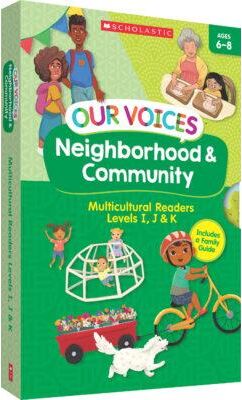
Our Voices: Neighborhood & Community Boxed SetFoster a feeling of belonging while building key reading skills with these colorful storybooks that spotlight a variety of neighborhoods and communities. The 10 charming stories feature characters from different cultural backgrounds who learn about...30,59 $*Shipping: 0,00 $Secure redirect to the provider
-
How is the partitive formed?
The partitive is formed in French by using the preposition "de" followed by the definite article "le," "la," or "les." This combination contracts to form "du," "de la," or "des" before a singular or plural noun, respectively. For example, "some bread" is "du pain" and "some apples" is "des pommes." The partitive is used to indicate an unspecified quantity or portion of a mass noun. **
-
What is the French partitive article?
The French partitive article is used to indicate an unspecified quantity of a noun that cannot be counted. It is formed by combining the preposition "de" with the definite article corresponding to the noun's gender and number. For example, "du" is used with masculine singular nouns, "de la" with feminine singular nouns, and "des" with plural nouns. The partitive article is used in French to express concepts like some, any, or a part of something. **
-
What are partitive articles in the French language?
Partitive articles in French are used to indicate an unspecified quantity of a noun. They are used when referring to a portion or some of a mass noun, such as food or liquid. The partitive articles in French are "du" (for masculine nouns), "de la" (for feminine nouns), and "de l'" (for nouns starting with a vowel or silent "h"). These articles are essential for expressing the concept of some or any in French. **
-
What is the rule for the partitive article?
The rule for the partitive article in French is to use "de" followed by the definite article (le, la, les) to indicate an unspecified quantity or some of a mass noun. For example, "du" is used for masculine singular nouns, "de la" for feminine singular nouns, and "des" for plural nouns. The partitive article is used when referring to an unknown or unspecified quantity of something. **
Similar search terms for Partitive
-
Uplifted Finds Predatory Engagement Wrestling Puppet Hub Predatory Engagement Wrestling Puppet HubTransform interactive play with the PredatoryEngagement Puppet, a professionalgrade interaction module engineered with manualsimulation logic. This highutility tool features a reinforced plush architecture and poseable limbs, specifically designed...85,97 $*Shipping: 0,00 $Secure redirect to the provider
-
Linon May Blue and Gold Campaign DeskWork in style on the May Blue and Gold Campaign Desk. The spacious top has a rich blue finish accented by the X styled matte gold legs. Small round gold knobs grace the front of the large storage drawer.268,20 $*Shipping: 0,00 $Secure redirect to the provider
-
How do you form the genitive partitive in Latin?
In Latin, the genitive partitive is formed by using the genitive case of the noun followed by the word "partis" or "partis" (depending on the gender of the noun) to indicate a part of the whole. For example, if the noun is "puella" (girl), the genitive partitive would be "puellae partis" to indicate "part of the girl." This construction is used to express the idea of "some of" or "a part of" something. **
-
What are partitive articles and quantity increases in French?
Partitive articles in French are used to indicate an unspecified quantity of a noun. They are used with uncountable nouns or when referring to a portion of something. Quantity increases in French involve using words like "plus de" (more), "beaucoup de" (a lot of), or "trop de" (too much) to indicate an increase in the quantity of something. These expressions are used to specify a larger amount of a noun compared to using just the partitive article. **
-
When do you use the partitive article in French?
The partitive article in French is used to indicate an unspecified quantity of a mass noun. It is used when referring to a part of a whole, or an unspecified amount of something. For example, "du" is used for masculine nouns, "de la" for feminine nouns, and "de l'" for nouns starting with a vowel or silent "h". It is important to use the partitive article when talking about food, drinks, or other uncountable nouns in French. **
-
Can you please help me with the partitive article?
The partitive article is used in French to indicate an unspecified quantity of something. It is often used with uncountable nouns to express "some" or "any" in English. The partitive article changes depending on the gender and number of the noun it precedes. For example, "du" is used before masculine singular nouns, "de la" before feminine singular nouns, and "des" before plural nouns. It is important to use the correct partitive article to indicate the appropriate quantity in French. **
* All prices are inclusive of VAT and, if applicable, plus shipping costs. The offer information is based on the details provided by the respective shop and is updated through automated processes. Real-time updates do not occur, so deviations can occur in individual cases. ** Note: Parts of this content were created by AI.